DIY vs. Professional Exterior Cleaning
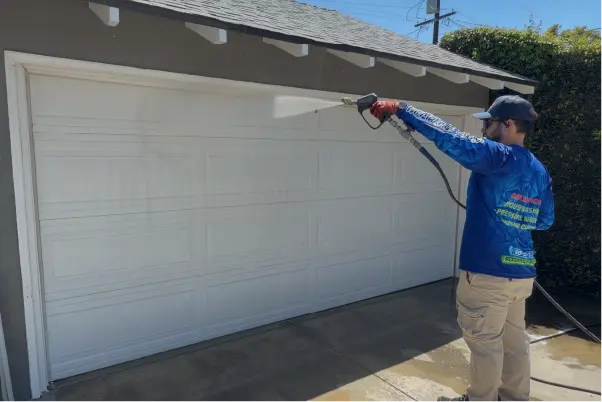
The real difference isn't effort, it's equipment and method
Almost anyone can rent a pressure washer or grab a squeegee and a bottle of glass cleaner. So why hire a professional?
Because the gap between a DIY job and a professional result has very little to do with how hard you scrub. It comes down to two things: the equipment being used and the method matched to each surface. Use the wrong pressure, the wrong water, or the wrong technique, and you can streak your glass, etch your concrete, strip your paint, or force water behind your siding, turning a Saturday project into a repair bill.
Here's what professional-grade equipment actually does differently, surface by surface, and why it matters for your home.
Windows: the purified-water difference
Most people clean windows with soap, a squeegee, and a ladder. It works for a while, but soap leaves a film that attracts dirt, hard-water minerals dry into spots, and anything above the first floor means balancing on a ladder over your landscaping.
We clean glass with a purified-water (deionized) system paired with a carbon-fiber water-fed pole. Here's why that's better:
- It dries spot-free. Tap water is full of dissolved minerals that leave the spots you see after rain. Our system strips those minerals out completely, so the water rinses the glass and dries clear, with no soap, no residue, and nothing left behind to attract dirt. Windows actually stay cleaner longer.
- It reaches what ladders can't, safely. Our water-fed poles extend to reach second- and third-story windows, skylights, and awkward spots from the ground. That means no ladders leaning against your house, no foot traffic through your flower beds, and no safety risk on your property.
- It's gentle but thorough. The brush we use combines soft boar's-hair bristles with a glide-friendly outer ring, scrubbing away grime without scratching glass or frames, while jets rinse everything clean.
The result: clearer glass, no streaks, and a finish that lasts, without anyone climbing your roofline.
Soft washing: the safe way to clean stucco, siding, and roofs
This is where most DIY jobs (and even some "pressure washing" companies) get it wrong. Blasting high pressure at stucco, painted surfaces, or a roof can crack finishes, strip paint, lift shingles, and drive water where it shouldn't go.
The correct method for those surfaces is soft washing: low pressure combined with professional cleaning solutions that do the work chemically instead of by force. For house washing, we run our pressure washer with a soft-wash injector that draws in and meters our professional cleaning solutions, paired with the correct low-pressure tips. It's not a pressure washer "turned down"; the injector and the right tips let us apply the solution at a gentle pressure closer to a garden hose, so it lifts mold, algae, and grime without cracking stucco, stripping paint, or damaging your siding. The cleaning power comes from the solution and the right equipment, not raw force.
We also run a dedicated soft-wash pump alongside our pressure-washer-and-injector setup, and each is the right tool for certain jobs, so we come equipped for any surface. The soft-wash pump is ideal for roofs and higher, more delicate surfaces, applying our cleaning solutions at a steady low pressure with excellent reach from the ground. The pressure washer with a soft-wash injector is ideal for house washing and larger wall areas, where its flow lets us apply solution and rinse across a lot of square footage efficiently. Both apply the solution gently and safely; having both simply means we always bring the setup best suited to the job in front of us.
Why it matters:
- It kills mold, algae, and mildew at the root rather than just rinsing the surface. That's why a proper soft wash stays clean far longer than a quick blast.
- It protects your surfaces. The right pressure for the right material means no cracked stucco, no stripped paint, and no damaged roof tiles.
- It's the only safe way to clean a roof. If a company is putting high pressure on your roof, that's a red flag. Soft washing removes the black streaks and algae without shortening the life of your shingles or tiles.
Pressure washing: the right tool for the right job
Pressure washing absolutely has its place, on the right surfaces, with the right machine. Driveways, walkways, patios, and other hard surfaces respond beautifully to it. But a consumer-grade rental often isn't powerful or consistent enough to do it well, and in the wrong hands it leaves "zebra striping" and gouges.
Our setup is built for professional results:
- Two professional pressure washers, a Landa hot-water (heated) pressure washer and a separate cold-water pressure washer, giving us the right flow and consistency to clean evenly instead of in patchy streaks.
- Hot-water capability from the Landa, which cuts through grease, oil, and organic buildup that cold water alone leaves behind.
- A professional surface cleaner that cleans flat concrete in even, overlapping passes, with no wand streaks and no missed lines, just a uniform finish.
- A 200-gallon onboard water tank. Pressure washing uses a lot of water at a steady rate, so we run our pressure washers from the tank and connect it to your home's water supply to keep it topped up throughout the job. That gives us a constant, reliable water source from start to finish: steady pressure, no interruptions, and no strain on your home's plumbing.
That combination is the difference between a driveway that looks cleaned and one that looks restored.
Why it matters beyond looks
A clean exterior isn't only about curb appeal. Left alone, algae and mildew hold moisture against your surfaces and slowly degrade paint, stucco, and roofing. Organic growth gets harder and more expensive to remove the longer it sits. Slippery walkways become a safety issue.
Doing it right, with the correct method and equipment, protects the value of your home, not just its appearance. And doing it right the first time is almost always cheaper than repairing the damage a wrong-pressure DIY job can cause.
The bottom line
Hiring a professional isn't about paying someone to do something you could do yourself. It's about getting purified-water glass that dries spot-free, surfaces that are cleaned with the method they actually need, and the whole thing done safely, without ladders against your house or guesswork about pressure.
That's the standard we built Rexterior around, and it's why we invested in professional-grade equipment for every surface of your home.
Want it done right? Request a free quote or call (626) 545-3132. Explore our window cleaning, pressure washing, house washing, and roof washing services, or bundle and save with our service packages.
Frequently asked questions
Is it worth hiring a professional window cleaner instead of doing it myself?
For ground-floor windows, you can certainly DIY. But professionals use purified-water systems that dry spot-free without soap residue, and water-fed poles that safely reach upper-story glass from the ground, results and safety that are hard to match with a squeegee and ladder.
What is soft washing, and why does it matter?
Soft washing uses low pressure plus professional cleaning solutions to safely clean delicate surfaces like stucco, siding, and roofs. It removes mold and algae at the root, so it stays clean longer, and it avoids the damage that high pressure can cause to those materials.
Can't I just rent a pressure washer and do it myself?
You can for hard surfaces like concrete, but rental machines often lack the power, hot water, and surface-cleaning attachments needed for an even, professional finish, and high pressure in the wrong place can crack stucco, strip paint, or damage a roof. Knowing which method each surface needs is where professionals save you from costly mistakes.
Why does purified water clean windows better?
Tap water contains dissolved minerals that dry into spots. A purified-water system removes those minerals, so the water rinses glass completely clean and dries clear, with no soap, no streaks, and no residue to attract new dirt.
Do you use ladders on my house?
For most windows, no. Our water-fed poles let us clean upper-story windows from the ground, which is safer for your property and avoids ladders resting against your home or landscaping.