Does Solar Panel Cleaning Actually Boost Output?
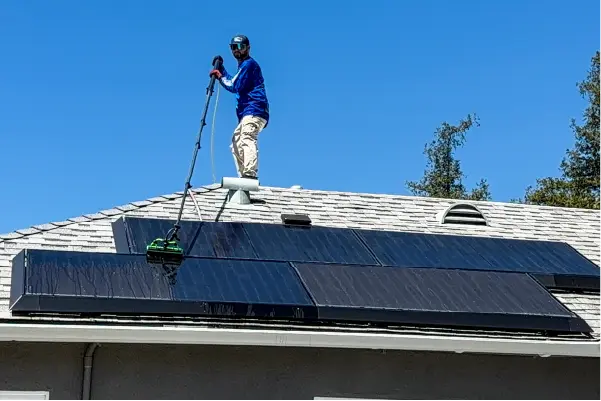
You paid for solar panels to generate power, so it's worth asking: does keeping them clean actually make a difference? The short answer is yes, and in a dry, dusty area like the San Gabriel Valley, more than most people expect. Here's why dirty panels cost you output, and the right way to clean them.
Yes, dirty panels lose output
Solar panels make electricity from sunlight, so anything that blocks that light, dust, pollen, bird droppings, or a hazy film, cuts into how much power they produce. Studies consistently show dirty panels generate less, and in dry regions where rain rarely rinses them, the loss can climb into the double digits. That's energy you've already paid to capture, quietly going to waste.
The panels don't have to look filthy to underperform. A thin, even layer of dust across the whole array is enough to shave output off every panel at once.
Why Pasadena-area panels get dirty fast
Our local conditions are almost designed to coat solar panels:
- Long dry stretches mean months can pass with no rain to rinse the glass
- Dust and Santa Ana winds carry grit onto every surface
- Heavy spring pollen settles into a sticky film
- Bird droppings can fully block individual cells, which drags down a whole panel's performance
- Wildfire ash in bad seasons adds another layer
And because panels sit at an angle on the roof, the little rain we do get often leaves streaks and mineral spots rather than a clean rinse.
Why you shouldn't just hose them off
Grabbing a hose and some soap seems easy, but it can do more harm than good. Tap water dries into mineral spots that block light, household soaps can leave a residue or damage the panel's coating, and stiff brushes or squeegees can scratch the glass. Walking on the roof to reach them is a safety risk and can crack panels or roofing. Harsh cleaning can also affect your warranty.
The right way: purified water, gentle tools
We clean solar panels the way manufacturers recommend, with purified (deionized) water and soft, panel-safe tools, no harsh chemicals. Here's why that matters:
- Purified water dries spot-free, so there's no mineral film left behind to block light
- Soft brushes and low pressure lift dust and grime without scratching the glass or coating
- Water-fed poles let us reach panels from the ground where possible, which is safer for your roof and your panels
- No abrasive chemicals, which protects both the panels and your warranty
The result is panels that are genuinely clean and working at full capacity, not just rinsed.
Want your panels producing what they should? Request a free quote or call (626) 545-3132. Learn more about our solar panel cleaning service.
Frequently asked questions
Does cleaning solar panels really increase output?
Yes. Dust, pollen, and droppings block sunlight, so clean panels produce more power. In dry, low-rain areas the difference is especially noticeable because panels go a long time without a natural rinse.
How often should solar panels be cleaned?
Once or twice a year works for most homes in our area, more if you're near heavy dust, lots of trees, or frequent bird activity.
Can I clean my solar panels myself?
It's risky. Tap water leaves spots, household soaps can damage the coating, stiff brushes scratch the glass, and getting on the roof is dangerous. Purified-water cleaning with soft tools is safer and more effective.