Gutter Cleaning 101: Signs You Need It Now
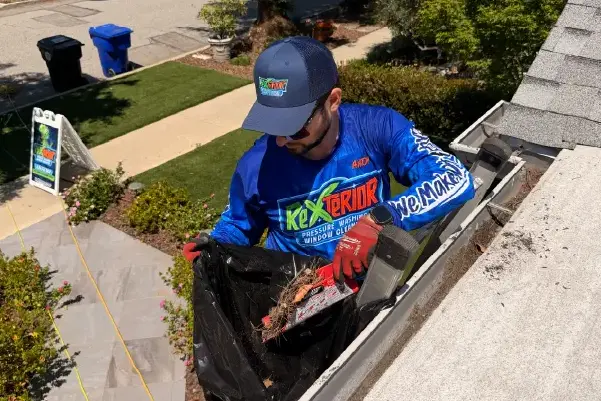
Gutters are easy to ignore, right up until they cause a problem. And a clogged gutter doesn't just overflow; it can quietly lead to water damage, foundation issues, and pest problems that cost far more than a cleaning. Here's why gutters matter and the signs it's time to clear yours.
What gutters actually do
Your gutters have one job: move rainwater off the roof and away from your home. When they're clear, water flows through the downspouts and away from your foundation. When they're clogged with leaves and debris, that water backs up, spills over, and ends up exactly where you don't want it, against your walls, your foundation, and your roofline.
Signs your gutters need cleaning now
You don't have to climb up to know there's a problem. Watch for these:
- Water spilling over the sides during rain instead of running to the downspouts
- Plants or weeds growing out of the gutters, a sure sign of packed debris and soil
- Sagging or pulling away from the house, the weight of wet debris strains the brackets
- Dark "tiger stripes" or staining running down the exterior of the gutters
- Pooling water or eroded soil along the foundation after it rains
- Birds, insects, or rodents gathering around the roofline, clogged gutters make great nests
- Granules and grit collecting in the gutters, often washed down from an aging roof
Why it matters more than people think
Clogged gutters are one of the most common causes of preventable home damage. Overflowing water can rot fascia boards and soffits, seep behind siding, crack or undermine foundations, and even find its way into basements and crawl spaces. In a fire-prone area, dry leaf debris in gutters is also a real hazard. A quick, regular cleaning heads all of that off.
How often, especially in Pasadena
Most homes should have gutters cleaned twice a year, in spring and fall. In the San Gabriel Valley, tree-heavy neighborhoods with oaks, sycamores, and pines often need it more, and clearing them before the rainy season is the single most important timing. Going into winter with clear gutters means the first big storm drains instead of overflowing.
Leave the ladder to us
Gutter cleaning means ladders, height, and balancing while you scoop, which is where a lot of homeowner injuries happen. We clear the debris, flush the downspouts to confirm they run freely, and check that everything is draining the way it should, no ladders or guesswork on your end.
Not sure when your gutters were last cleared? Request a free quote or call (626) 545-3132. Learn more about our gutter cleaning service.
Frequently asked questions
How often should gutters be cleaned?
Twice a year is the standard, spring and fall. Homes surrounded by trees may need it more often, and clearing gutters before the rainy season is especially important.
What happens if I never clean my gutters?
Clogged gutters overflow, which can rot fascia and soffits, damage siding, undermine the foundation, and attract pests. It's one of the most common causes of avoidable water damage.
Can clogged gutters really damage my foundation?
Yes. When water overflows instead of draining away, it pools along the base of your home, which over time can erode soil and crack or weaken the foundation.