Never Pressure Wash Your Roof — Here's Why
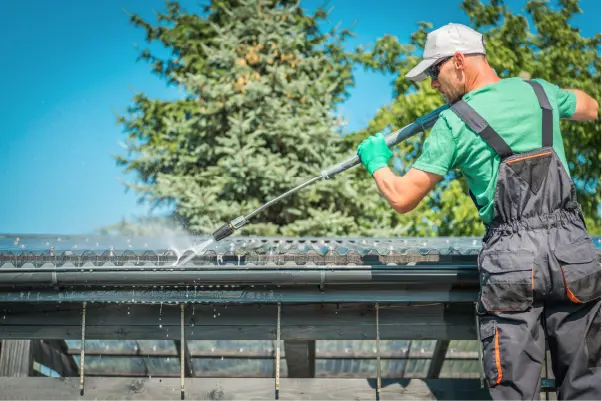
Those dark streaks creeping across your roof are tempting to blast off with a pressure washer. Please don't, or hire anyone who offers to. High pressure is one of the fastest ways to damage a roof, and the streaks aren't even really "dirt." Here's what's actually going on up there and the safe way to clean it.
What high pressure does to a roof
Roofing materials are built to shed water, not to take a concentrated blast of it. Pointing a pressure washer at shingles or tiles can:
- Strip the protective granules off asphalt shingles, the very layer that shields them from UV and weather. Once they're gone, the shingle ages fast.
- Lift, crack, or dislodge shingles and tiles, creating gaps where water can get in.
- Force water underneath the roofing and into the underlayment, leading to leaks and rot you won't see until there's damage inside.
- Void your roof warranty. Most manufacturers specifically prohibit pressure washing.
In short, high pressure can turn a cosmetic issue into a five-figure repair.
Those black streaks aren't just dirt
The dark stains and streaks on most roofs are a hardy algae that feeds on the roofing material and spreads in our humid mornings and shaded areas. Because it's a living organism with roots in the surface, blasting it with water doesn't actually kill it, it just knocks off the top layer, and it grows right back, often within months.
To keep a roof clean for the long term, you have to treat the growth at the source, not just rinse the surface.
The right way: soft washing
Roofs should always be soft washed, never pressure washed. Soft washing uses very low pressure combined with professional cleaning solutions that break down the algae, moss, and mildew at the root. The solution does the work, so there's no force to damage the roof.
Done correctly, soft washing:
- Kills the growth at the source, so the roof stays clean far longer than a rinse
- Protects the granules, shingles, and tiles instead of stripping them
- Can be applied safely from the ground, with no one walking or dragging equipment across fragile roofing
At Rexterior, roofs are cleaned with a dedicated soft-wash setup and professional cleaning solutions, matched to your specific roofing material.
Why it's worth doing
Beyond curb appeal, algae and moss hold moisture against the roof, which accelerates wear and can shorten its lifespan by years. Dark streaks also absorb heat, which can nudge up cooling costs. Cleaning a roof the right way protects one of the most expensive parts of your home.
Seeing streaks or moss on your roof? Request a free quote or call (626) 545-3132. Learn more about our roof washing service.
Frequently asked questions
Can I pressure wash my own roof?
You shouldn't. High pressure strips protective granules, can lift shingles, force water underneath, and often voids the warranty. Roofs need soft washing, low pressure plus cleaning solutions, instead.
What are the black streaks on my roof?
They're typically a roof algae that feeds on the shingles and spreads in shade and humidity. Because it has roots in the surface, it needs to be treated with cleaning solutions, not just rinsed off, or it grows back quickly.
How often should a roof be cleaned?
Most roofs need attention every one to three years, sooner if you see streaks, moss, or dark patches. Soft washing on a sensible schedule keeps growth from shortening the roof's life.